Docxsity Agent
Science | Class 8 (English)
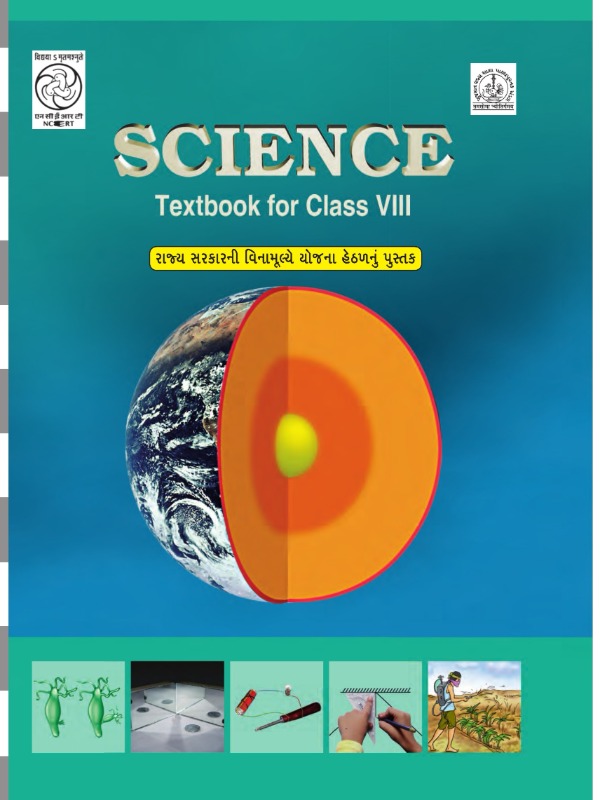
The "science textbook for class viii," developed by the National Council of Educational Research and Training (NCERT), represents a significant advancement in educational pedagogy, primarily by championing a child-centered approach. This textbook is meticulously designed to discourage rote learning, instead fostering an environment where children are treated as active participants in their learning journey rather than passive receivers of information. It achieves this by prioritizing opportunities for contemplation, encouraging discussions within small groups, and integrating activities that demand hands-on experience, thereby aligning with the vision of a child-centred system of education as outlined in national policies. The book encourages children to ask questions and nurtures their natural curiosity, recognizing that children generate new knowledge when given the freedom to engage with information.
Furthermore, the textbook excels in fostering experiential learning by systematically recalling children’s own experiences and building scientific concepts around them. Numerous activities are suggested throughout the book, many of which are simple enough for students to perform independently with minimal apparatus, promoting a "learn by doing" philosophy. These activities are crafted not just to clarify concepts but also to help children develop crucial skills such as presenting data in tabular and graphical forms, reasoning, and drawing inferences. An integral aspect of this experiential learning is "extended learning," which comprises non-evaluative, voluntary projects designed to enhance children's interaction with experts, teachers, parents, and society, requiring them to collect information and formulate their own conclusions.
Finally, the textbook effectively connects scientific concepts to real-life situations, making learning relevant and engaging. It explicitly links the science studied in school with children's everyday lives, a principle supported by the National Curriculum Framework 2005, which recommends linking school life to life outside school. This approach extends to sensitizing students to critical contemporary issues such as gender, environmental concerns, health and hygiene, water scarcity, and energy conservation, preparing them to be responsible citizens. By integrating these real-world contexts, the NCERT textbook ensures that scientific knowledge is not abstract but deeply rooted in the world around the students, enhancing both understanding and application.